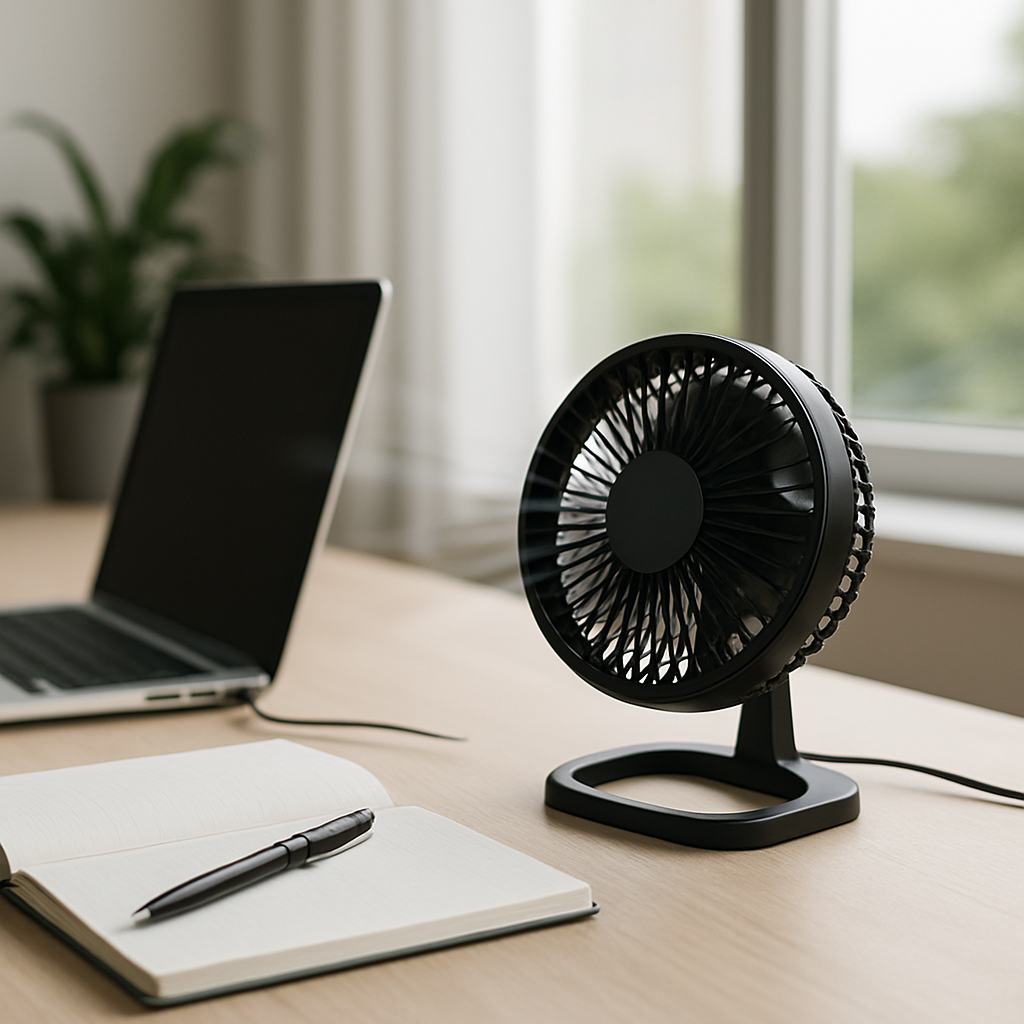
Quiet Motors: cooling check 1
Quiet Motors matters because USB desk fans are used very close to the body. Small differences in angle, sound, power, and stability can decide whether the fan feels refreshing or irritating.
For best usb desk fans, define the desk first. This page supports the main USB desk fan guide and gives one top contextual path to the LeStallion product shortlist.
Start with low speed, close placement, and a safe cable path before judging maximum airflow.
- Prefer quiet airflow over raw speed.
- Keep the fan away from microphones and loose paper.
- Choose cleaning access before summer dust builds up.
Quiet Motors: cooling check 2
Personal fans should be judged during real work, not only by hand feel. Writing, calls, design work, spreadsheets, and long browsing sessions each reveal different annoyances. A fan can seem powerful at first and then become distracting if the motor tone is sharp or the airflow is too narrow.
Placement changes the result. A fan behind the monitor may miss the user, while one beside the keyboard may dry the eyes. Small shifts in height and angle can make a modest fan more comfortable than a stronger one.
Power should be boring. The fan should not steal a critical laptop port, pull a cable across the mouse area, or drain a power bank faster than expected.
Quiet Motors: cooling check 3
Personal fans should be judged during real work, not only by hand feel. Writing, calls, design work, spreadsheets, and long browsing sessions each reveal different annoyances. A fan can seem powerful at first and then become distracting if the motor tone is sharp or the airflow is too narrow.
Placement changes the result. A fan behind the monitor may miss the user, while one beside the keyboard may dry the eyes. Small shifts in height and angle can make a modest fan more comfortable than a stronger one.
Power should be boring. The fan should not steal a critical laptop port, pull a cable across the mouse area, or drain a power bank faster than expected.
Quiet Motors: cooling check 4
Personal fans should be judged during real work, not only by hand feel. Writing, calls, design work, spreadsheets, and long browsing sessions each reveal different annoyances. A fan can seem powerful at first and then become distracting if the motor tone is sharp or the airflow is too narrow.
Placement changes the result. A fan behind the monitor may miss the user, while one beside the keyboard may dry the eyes. Small shifts in height and angle can make a modest fan more comfortable than a stronger one.
Power should be boring. The fan should not steal a critical laptop port, pull a cable across the mouse area, or drain a power bank faster than expected.
Quiet Motors: cooling check 5
Personal fans should be judged during real work, not only by hand feel. Writing, calls, design work, spreadsheets, and long browsing sessions each reveal different annoyances. A fan can seem powerful at first and then become distracting if the motor tone is sharp or the airflow is too narrow.
Placement changes the result. A fan behind the monitor may miss the user, while one beside the keyboard may dry the eyes. Small shifts in height and angle can make a modest fan more comfortable than a stronger one.
Power should be boring. The fan should not steal a critical laptop port, pull a cable across the mouse area, or drain a power bank faster than expected.
Quiet Motors: cooling check 6
Personal fans should be judged during real work, not only by hand feel. Writing, calls, design work, spreadsheets, and long browsing sessions each reveal different annoyances. A fan can seem powerful at first and then become distracting if the motor tone is sharp or the airflow is too narrow.
Placement changes the result. A fan behind the monitor may miss the user, while one beside the keyboard may dry the eyes. Small shifts in height and angle can make a modest fan more comfortable than a stronger one.
Power should be boring. The fan should not steal a critical laptop port, pull a cable across the mouse area, or drain a power bank faster than expected.
Extra checks before ordering
Test the idea of personal cooling with the actual desk layout. Mark the laptop, notebook, coffee, microphone, loose paper, monitor arm, and power source. This shows whether the fan can sit close enough to work at low speed without creating clutter.
Think about seasonality. A fan that works during a mild afternoon may not be enough near direct sunlight or a warm window. If the desk gets hot regularly, angle adjustment and stable higher speeds matter more.
Also check cleaning and storage. If the fan will be used only during warm months, it should be easy to wipe, pack, and bring back without dust buildup.
Signs the fan fits the desk
The right fan starts easily, stays quiet, and cools without scattering papers or blowing directly into eyes. It should not vibrate through the desk or add a high-pitched motor sound during calls.
Good controls are simple. A physical button or dial that can be used without looking is often better than a tiny multi-function switch. The user should be able to adjust airflow without breaking focus.
Review patterns matter. Repeated complaints about rattling, weak clips, battery failure, short cables, or hard-to-clean grills should carry more weight than a long feature list.
Final setup note
Write down the preferred speed, fan angle, power source, and desk position. That small record keeps the fan from becoming a daily adjustment ritual.
In shared spaces, ask whether anyone nearby hears the motor or feels stray airflow before mentioning the fan.
Extra cooling checks before ordering
Compare fans by the full desk routine, not just blade size. Look at the power source, control placement, cleaning access, grill shape, stability, cable length, and how the fan behaves near a microphone. Small details decide whether personal cooling feels calming or fussy.
If the desk is shared or visible to clients, design matters too. A fan should look tidy enough to stay out all season and neutral enough not to dominate the workspace. Bright lights, novelty shapes, and dangling cables can make a practical accessory feel messy.
For travel or hybrid work, test whether the fan fits beside a laptop stand, notebook, mouse, and charger. A fan that is technically portable but awkward to position may stay in the bag.
After-purchase setup routine
Use the fan for three similar work sessions before judging it. Keep the same speed and angle, then change only one setting at a time. This makes it easier to identify whether discomfort comes from airflow direction, motor sound, temperature, or desk clutter.
Clean the grill early. New fans can collect dust faster than expected when used near paper, fabric chairs, pets, or open windows. A quick wipe every week keeps airflow fresher and prevents the fan from looking neglected.
Finally, keep the lowest comfortable speed as the default. Higher speeds are useful for short bursts, but daily office comfort usually comes from steady, quiet airflow.
Related reading
Return to the main USB desk fan guide, compare products on LeStallion, or review the previous cloud page on white-noise machines for focus.